
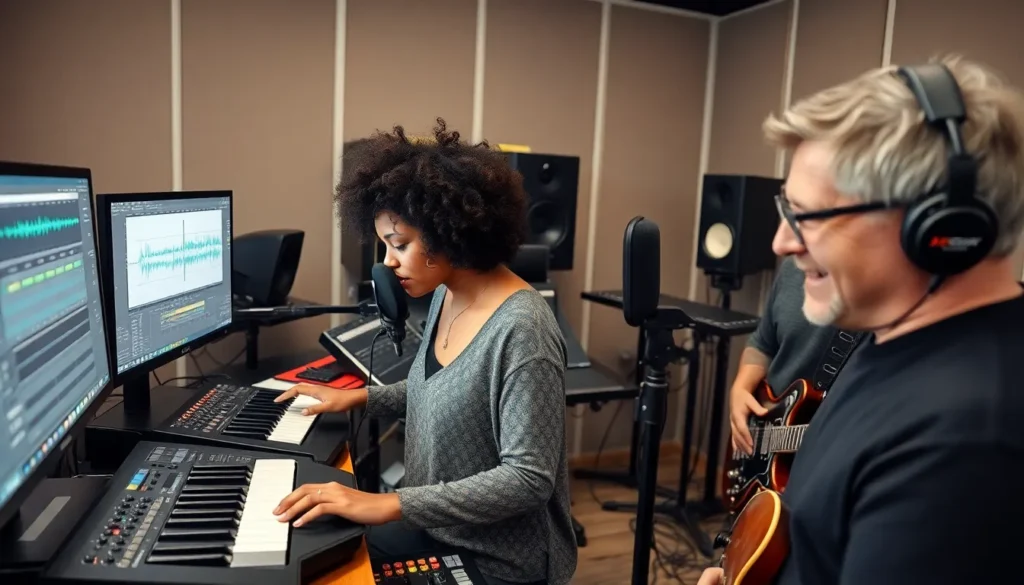

Imagine your favorite song playing live, but instead of just listening, you’re part of the performance. Real-time audio processing makes that dream a reality. It’s like having a personal DJ who can tweak the beats, adjust the vocals, and throw in some epic sound effects—all while the music flows seamlessly.
This technology isn’t just for musicians or sound engineers; it’s transforming how everyone interacts with audio. Whether it’s enhancing video game soundscapes or making virtual meetings more engaging, real-time audio processing is the unsung hero behind the scenes. Dive into the world where sound meets innovation, and discover how it’s changing the way we experience audio forever.
Overview Of Real-Time Audio Processing
Real-time audio processing involves manipulating audio signals instantaneously. This technology benefits various applications, including music production and broadcasting. Instruments, effects, and vocal adjustments occur in a fraction of a second, allowing for live interaction.
Latency remains a crucial factor in real-time audio processing. While minimal latency enhances user experience, excessive delays can disrupt performances. Typical processing latencies target values under 10 milliseconds for optimal functioning.
Numerous algorithms enhance audio quality during real-time processing. Equalization adjusts frequency balances, while dynamic range compression controls audio levels. Also, effects like reverb and delay enrich soundscapes, creating immersive environments.
Various hardware and software tools support real-time audio processing. Digital Audio Workstations (DAWs) provide robust platforms for users to edit and produce audio live. Additionally, audio interfaces connect microphones and instruments, ensuring high-quality input and output.
Users leverage real-time audio processing across multiple industries. In gaming, it enhances sound design, allowing players to engage more deeply with their environment. Online meetings benefit from noise cancellation and equalization, improving communication clarity.
Professionals and hobbyists alike utilize this transformative technology. Musicians harness real-time effects during live performances, ensuring engaging concerts. Sound engineers apply audio processing techniques to elevate recordings, enhancing overall sound quality.
Real-time audio processing continues to evolve with advancements in technology. Emerging tools focus on artificial intelligence and machine learning to automate processes. Enhanced capabilities will likely further reshape audio experiences in the future.
Applications Of Real-Time Audio Processing
Real-time audio processing finds diverse applications across various fields, enhancing user experiences and improving audio quality.
Music Production
Music production benefits significantly from real-time audio processing. Producers use this technology for immediate effects, making adjustments as the music plays. Effects like reverb and compression enhance recordings live, allowing for creative experimentation. Many Digital Audio Workstations (DAWs) support real-time processing, enabling artists to hear changes instantly. Instant feedback fosters innovation, allowing musicians to fine-tune their sound without delays. Collaboration between artists and producers improves, as they can analyze each other’s contributions on the spot.
Live Sound Engineering
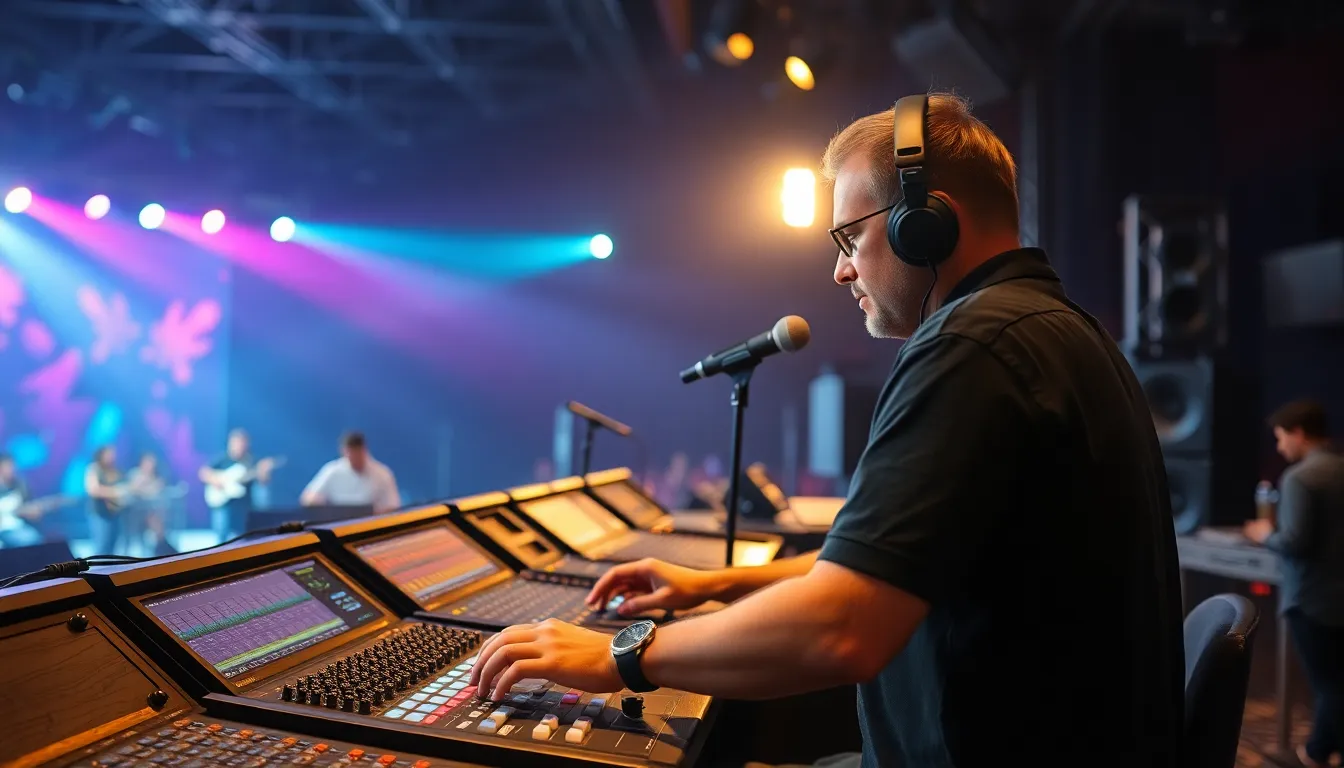
Live sound engineering relies heavily on real-time audio processing. Engineers adjust sounds in real time for optimal performance during concerts and events. They employ tools like equalizers and filters, ensuring quality sound even in challenging acoustic environments. Minimizing latency under 10 milliseconds is crucial, as this keeps performances seamless and engaging. Instantaneous adjustments account for varying audience dynamics, allowing the sound to adapt throughout the event. Audio enhancement features enhance the overall auditory experience, captivating audiences and creating memorable live scenarios.
Technologies Behind Real-Time Audio Processing
Real-time audio processing employs various technologies to enhance audio interactions. Key components include digital signal processing and hardware solutions designed to streamline performance.
Digital Signal Processing (DSP)
Digital signal processing forms the backbone of real-time audio manipulation. DSP techniques allow for immediate alterations to audio signals, ensuring clarity and precision. Common algorithms like Fourier transforms and filters analyze and modify audio data in real-time. Latency reduction becomes critical during this process, focusing on achieving response times below 10 milliseconds. Features such as equalization and dynamic range compression improve sound quality, while real-time effects contribute to enriched audio experiences. With a focus on efficiency, DSP empowers both musicians and sound engineers to innovate continuously.
Hardware Solutions
Hardware solutions play a pivotal role in the efficiency of real-time audio processing. Audio interfaces provide the necessary connections between devices, facilitating sound capture and playback. High-performance Digital Audio Workstations (DAWs) integrate seamlessly with various plugins that enhance audio quality. Specific processors, like Field Programmable Gate Arrays (FPGAs), offer rapid processing capabilities essential for complex tasks. Many audio engineers utilize dedicated mixing consoles that include built-in processing features, allowing for swift adjustments during live events. Overall, robust hardware solutions significantly enhance audio interactions, ensuring an immersive experience across multiple platforms.
Challenges In Real-Time Audio Processing
Real-time audio processing entails several challenges that can affect audio quality and user experience. These difficulties include latency issues and resource management.
Latency Issues
Latency presents a significant challenge in real-time audio processing. Users expect sound to sync precisely with visuals during live performances or gaming. Values exceeding 10 milliseconds can disrupt the experience. Minimizing latency requires specific hardware, such as high-quality audio interfaces and efficient Digital Audio Workstations (DAWs). Various techniques, like buffer size adjustment and algorithm optimization, can further reduce delays. Engineers often monitor latency in live settings to maintain optimal performance. Achieving ultra-low latency remains a critical focus for developers and end-users.
Resource Management
Effectively managing resources is crucial in real-time audio processing. High processing demands can overwhelm standard devices, leading to audio dropouts or glitches. Efficient CPU and memory usage ensures seamless performance during processing tasks. Developers often design applications that balance processing loads between hardware and software. Optimizing this balance reduces the risk of failure in real-time situations. Additionally, utilizing dedicated DSP chips can alleviate strain on CPUs, enhancing overall system performance. Awareness of resource management is vital for successful audio applications in various industries.
Future Trends In Real-Time Audio Processing
Emerging technologies will shape real-time audio processing significantly. Growth in artificial intelligence enhances audio manipulation capabilities. AI algorithms can analyze and improve sound quality instantly, impacting various industries. For instance, virtual instruments increasingly utilize AI for realistic sound creation.
Machine learning continues to refine audio effects, creating personalized experiences for users. This trend leads to smarter noise cancellation techniques that adapt to different environments. Innovations in spatial audio provide an immersive listening experience, especially in gaming and virtual reality.
3D audio processing is set to become a standard feature. Developers are integrating this technology into music production and streaming platforms. Enhanced 3D techniques will allow for dynamic sound placement, further engaging listeners.
Mobile devices are also advancing, supporting real-time audio processing improvements. Higher processing power and better algorithms mean professionals can achieve studio-quality results on-the-go. Increased accessibility leads to a broader user base adopting real-time audio solutions.
Collaboration tools benefiting from real-time audio processing are trending. Significant developments will facilitate seamless communication in online meetings. As a result, collaboration among remote teams will flourish, driven by enhancements in audio clarity and interaction quality.
Overall, innovations in hardware and software will push real-time audio processing further. Companies will prioritize lower latency solutions for live performance environments. Events aim to enhance audience engagement, promising more captivating experiences in music and entertainment.
Real-time audio processing stands at the forefront of audio technology, transforming how listeners engage with sound. Its applications span diverse fields, from music production to virtual meetings, enhancing both creativity and communication. As advancements in AI and machine learning continue to unfold, the potential for personalized audio experiences grows.
The push for lower latency and improved hardware solutions ensures that real-time audio processing will only become more accessible and effective. This evolution promises to enrich live performances and interactive environments, creating captivating soundscapes that resonate with audiences. The future of audio interaction is bright, offering exciting possibilities for professionals and enthusiasts alike.


