
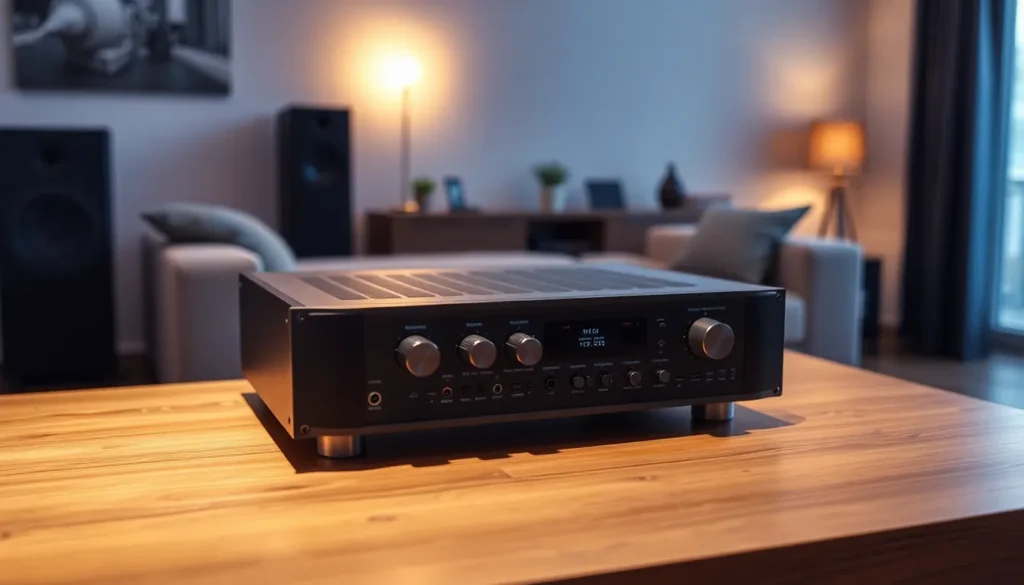

When it comes to audio gear, choosing the right amplifier can feel like navigating a maze with a blindfold on. With so many specs and features thrown around, it’s easy to get lost in a sea of wattage and distortion ratings. But fear not, audio enthusiasts! Understanding amplifier specs is simpler than finding the last slice of pizza at a party.
Understanding Amplifier Specs for Audio
Evaluating amplifier specifications simplifies the decision-making process. Key metrics help in matching amplifiers with audio gear effectively.
Power Output Ratings
Power output ratings indicate how loud an amplifier can drive speakers. Measured in watts, these ratings represent the amount of power supplied to the speakers. An amplifier with higher wattage typically achieves louder volumes. It’s essential to match the amplifier’s output with the speakers’ power handling capacity. For example, a speaker rated for 100 watts works best with an amplifier outputting between 50 to 100 watts. Consistency in these ratings prevents distortion and ensures optimal performance.
Total Harmonic Distortion (THD)
Total harmonic distortion quantifies the fidelity of an amplifier’s output. Expressed as a percentage, lower THD values signify cleaner sound reproduction. Goals often include achieving THD levels below 1% for high-quality audio. An amplifier exhibiting 0.05% THD delivers clearer sound compared to one with 1% THD. Understanding THD aids in identifying amplifiers that maintain audio integrity. It becomes crucial when seeking accurate and detailed sound reproduction across various audio frequencies.
Types of Amplifiers
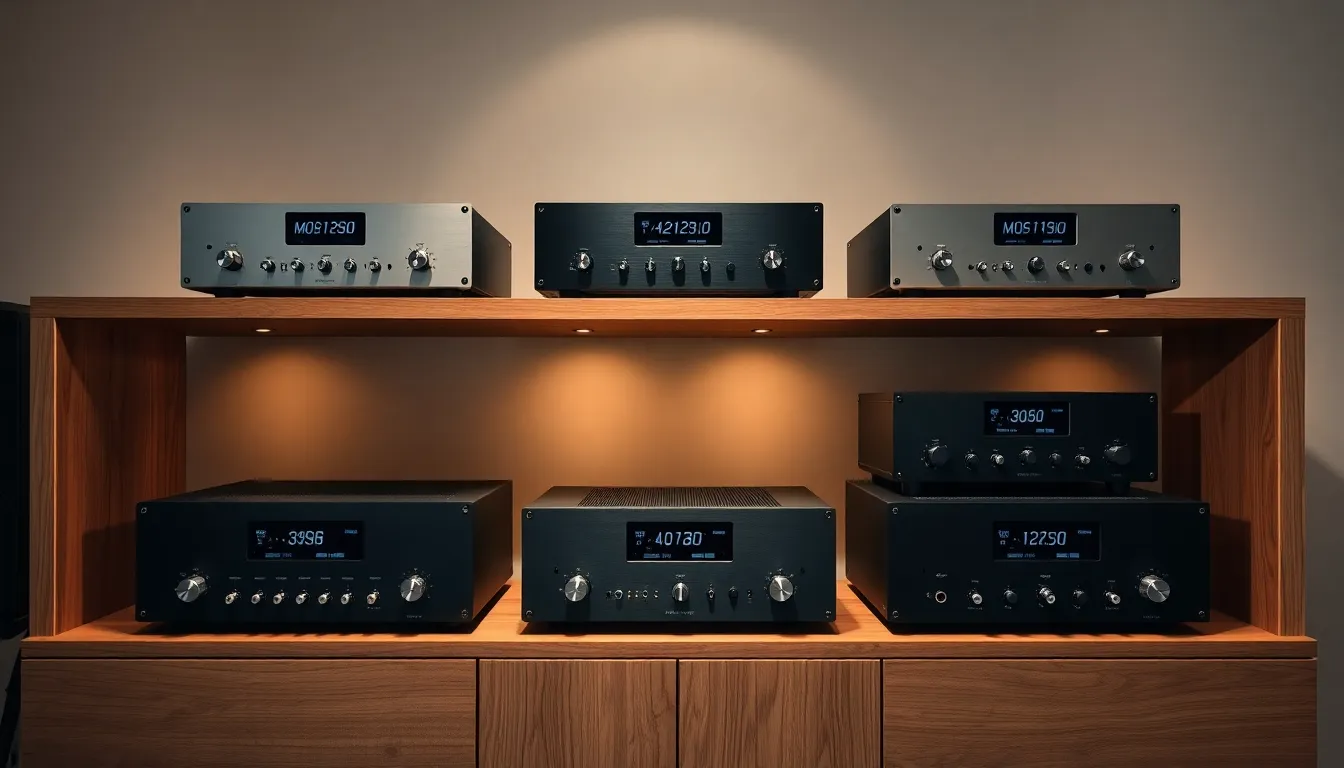
Different types of amplifiers cater to various audio needs and preferences. Understanding these types helps in selecting the right amplifier for specific audio gear.
Class A, B, AB, and D
Class A amplifiers deliver high-quality audio but consume more power. Class B amplifiers improve efficiency by using each transistor for half the signal cycle. Class AB combines features of both Class A and B, balancing sound quality with efficiency. Class D amplifiers, known for their compact design, utilize pulse-width modulation for high power efficiency, making them ideal for portable setups.
Integrated vs. Separate Amplifiers
Integrated amplifiers combine preamp and power amp functions in a single unit, streamlining audio setups. They save space and reduce complexity, ideal for casual listeners. Separate amplifiers consist of distinct preamp and power amp units, allowing for more granular control over audio performance. Audiophiles often prefer the flexibility of separate amplifiers since they can upgrade individual components over time.
Key Specifications to Consider
Understanding amplifier specifications allows individuals to make informed decisions when choosing audio gear. Key metrics focus on performance, ensuring a satisfying listening experience.
Signal-to-Noise Ratio (SNR)
Signal-to-noise ratio (SNR) measures the level of desired audio signal against background noise. Higher SNR values indicate clearer sound reproduction, essential for high-fidelity audio systems. For instance, an SNR of 100 dB delivers a nearly silent background during playback, enhancing the listening experience. Amplifiers with lower SNR may produce audible hiss or noise, detracting from clarity. Evaluating SNR helps individuals determine an amplifier’s capability, especially in critical listening environments.
Frequency Response
Frequency response defines an amplifier’s ability to reproduce audio across various frequencies. It’s expressed in hertz (Hz) and typically ranges from 20 Hz to 20 kHz, the standard hearing range for humans. Flat frequency response indicates an accurate sound reproduction, where all frequencies maintain equal volume levels. Deviations in frequency response can lead to coloration, emphasizing certain sounds over others. Evaluating an amplifier’s frequency response is crucial for ensuring balanced audio output, aligning with the listener’s preferences and system requirements.
Features that Enhance Performance
Amplifier features significantly affect audio performance, helping individuals achieve an optimal listening experience. Power output defines an amplifier’s ability to drive speakers loud enough without distortion. Higher power ratings can deliver richer sound, particularly at lower volume levels.
A critical metric, the signal-to-noise ratio (SNR), plays a vital role in clear sound reproduction. SNR indicates how much background noise exists compared to the desired audio signal; higher values represent improved clarity. Selecting an amplifier with a strong SNR ensures a cleaner, more detailed listening experience.
Frequency response also impacts sound fidelity. It describes the range of audio frequencies an amplifier can produce accurately, typically from 20 Hz to 20 kHz. Ideally, a flat frequency response prevents coloration and maintains true sound reproduction across the spectrum.
Another important specification is total harmonic distortion (THD). This figure measures the fidelity of the audio output, with lower THD values indicating clearer and more accurate sound. Selecting an amplifier with minimal distortion preserves audio integrity, making it essential for high-quality listening.
Integrated amplifiers offer simplicity by combining preamp and power amp capabilities in one device. This design facilitates easier setups, making them suitable for casual listeners. Separate amplifiers provide flexibility, allowing users to upgrade components individually based on their evolving audio needs.
Users also look for additional features that enhance functionality, such as Bluetooth connectivity or built-in equalizers. These options create convenient listening experiences while allowing adjustments tailored to personal preferences. Ultimately, considering these amplifier features leads to better audio performance and satisfaction.
Choosing the right amplifier can transform any audio experience. By understanding key specifications like power output, total harmonic distortion, signal-to-noise ratio, and frequency response, individuals can make informed decisions that align with their audio needs. Whether opting for an integrated or separate amplifier, the right choice can enhance sound quality and performance.
With various types available, including Class A, B, AB, and D amplifiers, users can find the perfect match for their setup. Emphasizing features like Bluetooth connectivity and built-in equalizers further personalizes the listening experience. Ultimately, a well-chosen amplifier not only meets expectations but elevates enjoyment across all audio formats.


